
Conference Organizers
Jeremy Levine
Associate Professor, Organizational Studies, Faculty Associate, Stone Center for Inequality Dynamics
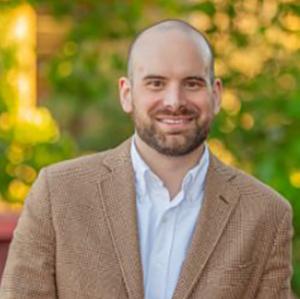 Jeremy’s work spans urban and political sociology, with a focus on the politics of inequality in cities and criminal legal systems. His first book was an ethnography of urban development in Boston. Jeremy is currently completing a new project on the history and consequences of crime victim policy in the United States. With several collaborators, he is working on a series of articles as well as his second book with Princeton University Press.
Before joining the faculty at Michigan, Jeremy earned an A.M. and Ph.D. in Sociology at Harvard University and was a doctoral fellow in the Inequality and Social Policy Program at the Harvard Kennedy School.
Davon Norris
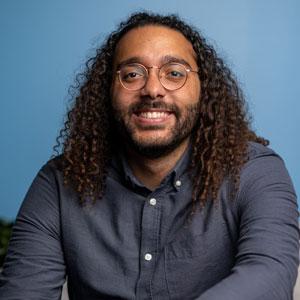
Assistant Professor, Organizational Studies, Faculty Associate, Stone Center for Inequality Dynamics
Davon Norris’s research is broadly oriented to understanding how our ways of determining what is valuable informs patterns of inequality with an acute focus on racism and racial inequality. Often, this means he studies the history, construction, and operation of various ratings, scores, and rankings whether that be at the government level (i.e., government credit ratings) or individual level (i.e., consumer credit scores). Other work that comes out of this interest in valuation processes further probes questions related to finance and the role of credit and debt in shaping inequality.
His research has been published in outlets such as Social Forces, Socio-Economic Review, Social Problems, and Sociological Forum, and has received awards from the Future of Privacy Forum and American Sociological Association. His work has been funded by the American Sociological Association. Davon received his Bachelor of Science in Accounting (2014), Master of Arts in Sociology (2018) and Ph.D. (2022) in Sociology all from The Ohio State University. Learn more about Davon at his website.
Theory Panel
Regina Baker
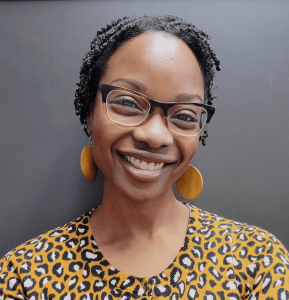 Associate Professor, Sociology, University of North Carolina at Chapel Hill
As a scholar and sociologist with training in both sociology and social work, Dr. Baker’s research seeks to understand the factors that create, maintain, and shape socioeconomic conditions and disparities across people, places, and time. She is particularly interested in the role of institutional mechanisms in shaping individual outcomes and broader patterns of poverty and inequality. Her recent and ongoing research focuses on the following areas: 1) poverty and socioeconomic inequality, especially among children and families, 2) the link between historical institutional mechanisms of inequality and contemporary conditions (e.g., racial inequality), 3) the politics of power (e.g., via unions, policies) in the distribution of resources and outcomes across place. Overall, her work intersects a number of areas including inequality, stratification, family, race, gender, political sociology, historical sociology, social demography, policy, and health.
Deadric T. Williams
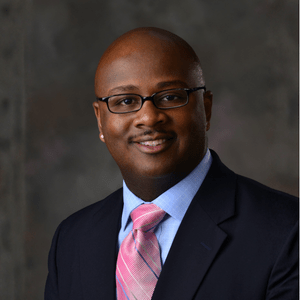 Associate Professor and Director of the Center for the Study of Family Health & Wellbeing, University of Tennessee
Deadric Williams’ research is organized around two general themes: (1) racism and families and (2) stress, couples’ relationships, and health. His research on racism and families uses Critical Race Theory as a theoretical perspective to challenge conventional sociological research on racial economic inequality among families. His second line of research examines stress and health as a longitudinal and dyadic process among couples. Deadric’s research has been published in outlets such as Issues in Race & Society, Journal of African American Studies, Personal Relationships, Society & Mental Health, American Journal of Human Biology, Population Research and Policy Review, among others.
Empirics Panel
Nafeesa Andrabi, Panel Moderator
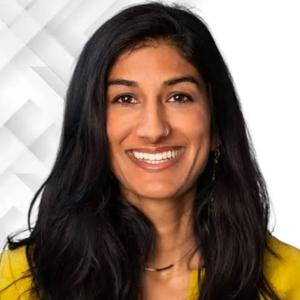 Assistant Professor, Sociology
Nafeesa Andrabi is an Assistant Professor of Sociology, a Research Assistant Professor in the Population Studies Center within the Institute for Social Research, and a Scholar with the Michigan Program for Advancing Cultural Transformation (M-PACT) in the Biomedical Sciences at University of Michigan. She is a sociologist and social demographer who primarily examines how and why race, religion, and nativity intersect to shape stress and health across the life course among multigenerational Muslim immigrants in the US. Andrabi is currently studying the relationship between sociopolitical stress and adverse reproductive health outcomes among Muslim immigrants using large-scale administrative data, quantitative experimental methods and interviews. In a related line of research, Andrabi examines groups that do not neatly fall within ethnoracial categories, like Muslims, can be integrated into and advance our conceptualization of global structural racism.
She received her PhD in Sociology from the University of North Carolina at Chapel Hill in 2024 and completed a Postdoctoral Fellowship at the University of Southern California Keck School of Medicine. At Carolina, she was a T32 Biosocial Fellow at the Carolina Population Center. Her research has been funded by the National Science Foundation, American Sociology Association, and the Society of Family Planning.
Tyson H. Brown
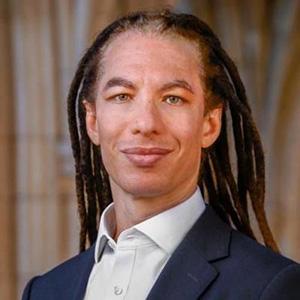 Professor of Sociology and Medicine, Duke University; Director, Samuel DuBois Cook Center on Social Equity
A medical sociologist, race scholar, and population health scientist, his research integrates innovative theoretical frameworks with advanced data science and statistical methods to examine the causes, consequences, and solutions to racial inequality, with the aim of advancing knowledge, informing policy, and fostering a more equitable society (see personal website). Dr. Brown’s research has led to high-impact publications in top journals across sociology, demography, gerontology, population health, and health policy.
Tukufu Zuberi
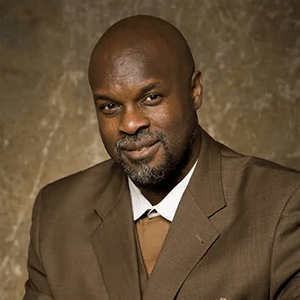 Lasry Family Professor of Race Relations; Professor, Sociology and Africana Studies, University of Pennsylvania
Dr. Tukufu Zuberi is dedicated to bringing a fresh view of culture and society to the public through various platforms such as guest lecturing at universities, television programs, and interactive social media. Currently, he works on human rights initiatives by participating in public speaking engagements, international collaborations with transnational organizations, and individuals dedicated to human equality. His research focuses on Race, African and African Diaspora populations.
Nick Graetz
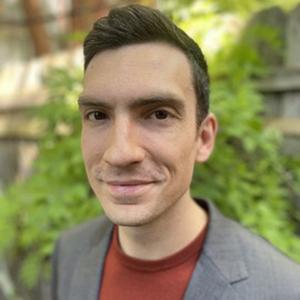 Assistant Professor, Sociology, Institute for Social Research and Data Innovation, University of Minnesota; Fellow, Climate and Community Institute
Nick Graetz studies how population health is shaped by the historical and contemporary structure of the housing market. He leads a joint project with the U.S. Census Bureau using linked administrative data to study the American housing crisis, with a particular focus on eviction. He also leads several projects related to housing, climate, and insurance as a member of the Climate and Community Project, a progressive climate policy think tank developing research on the climate and inequality nexus. Learn more about Nick and his work at his website.
Narrative Panel
Mo Torres, Panel Moderator
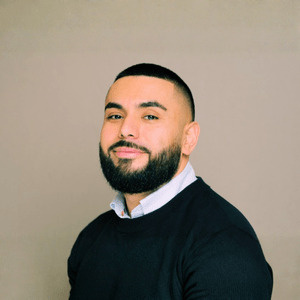 Assistant Professor, Sociology and Public Policy; Postdoctoral Fellow, Michigan Society of Fellows
Mo Torres is a sociologist interested in urban political economy, inequality, the sociology of race/racism, and the politics of knowledge production. He is a postdoctoral fellow in the Michigan Society of Fellows and an assistant professor of sociology and public policy. His current book project uses mixed and historical methods to explore the politics of post-industrial decline and the production of urban austerity in Michigan from the 1970s to the present. He is a U-M (MPP ’15) and Fulbright (Brazil ’19) alumnus and received his Ph.D. in sociology from Harvard University in 2023, where he held fellowships at the Ash Center for Democratic Governance and Stone Program in Inequality and Social Policy. A first-generation college graduate, Mo is a former Detroit Public Schools teacher.
Victor Ray
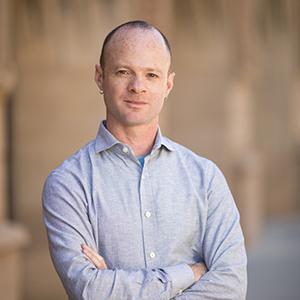 F. Wendell Miller Associate Professor, Sociology, Criminology, African American Studies, University of Iowa
Victor Ray is the F. Wendell Miller Associate Professor in the Departments of Sociology and Criminology and African American Studies at the University of Iowa and a Nonresident Fellow in Governance Studies at The Brookings Institution, and a Carr Center Fellow at the Harvard Kennedy School. His research applies critical race theory to classic sociological questions. His work has been published in the Annals of Internal Medicine, American Sociological Review, American Behavioral Scientist, Annals of the American Academy of Political and Social Science, Contexts, Ethnic and Racial Studies, The Journal of Marriage and Family, Sociology of Race and Ethnicity and Sociological Theory.
Elizabeth Korver-Glenn
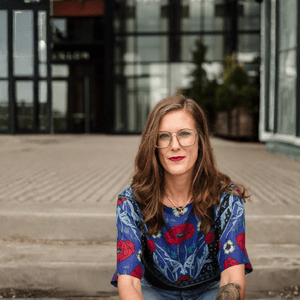 Assistant Professor, Sociology, University of North Carolina at Chapel Hill
Elizabeth Korver-Glenn’s research examines the sources and consequences of housing market inequalities and residential segregation in the United States and Europe. Her award-winning scholarship has appeared in numerous academic journals, including the American Sociological Review, Social Problems, Socio-Economic Review, City & Community, and Sociology of Race and Ethnicity, and has received coverage from multiple outlets such as the New York Times and CNN. Korver-Glenn has also recently published two books–”A Good Reputation: How Residents Fight for an American Barrio” (2024, University of Chicago Press) and “Race Brokers: Housing Markets and Segregation in 21st Century Urban America” (2021, Oxford University Press).
She studies, writes, teaches, and speaks about many things, most of them in some way related to racism, White supremacy, markets, or urban/neighborhood inequality. Propelling it all is this aim: to do justice. Learn more about her and her work on her website.